
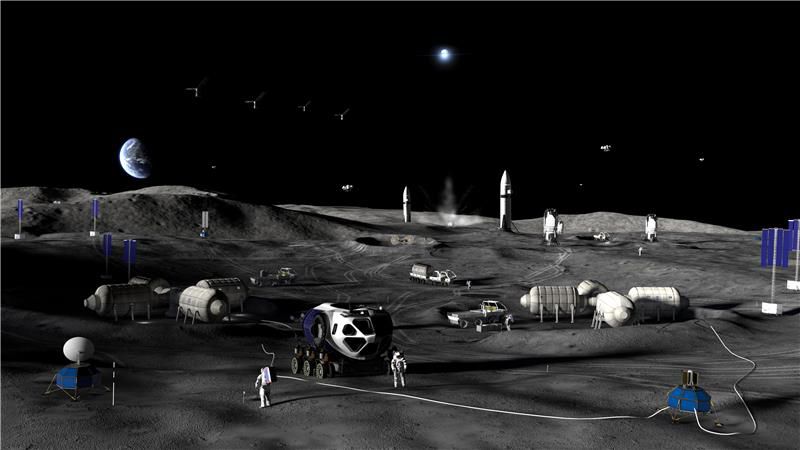
NASA has once again captured global attention with its ambitious plans for space exploration. In its latest announcement aligned with United States national space policy, the agency emphasized a major goal: not just returning humans to the Moon, but establishing a moonbase as a foundation for humanity’s future beyond Earth. This initiative reflects a broader vision to strengthen technological leadership and expand human presence in space.
Unlike Apollo missions, which were short-term visits, NASA is now aiming for a long-term presence on the lunar surface. Through the Artemis program, the agency is designing a lunar base that will serve as a hub for scientific research, technological experiments, and preparation for future missions to Mars. This moonbase is envisioned as a “second home” for humans, equipped with life-support systems and exploration infrastructure.
This plan is not just theoretical. NASA is targeting initial development steps before 2030, with increasingly frequent crewed missions to the Moon’s south pole—an area believed to contain water ice deposits. This resource is crucial, as it can be converted into oxygen and fuel, making the moonbase more self-sustaining and viable for long-term habitation.
Interestingly, NASA’s latest strategy marks a significant shift—from focusing on lunar orbit to directly building infrastructure on the Moon’s surface. Over time, this project could evolve into the first human settlement beyond Earth. If successful, the moonbase will not only represent a technological milestone but also mark the beginning of humanity’s journey toward becoming a multiplanetary species.
Source: NASA Press Release