
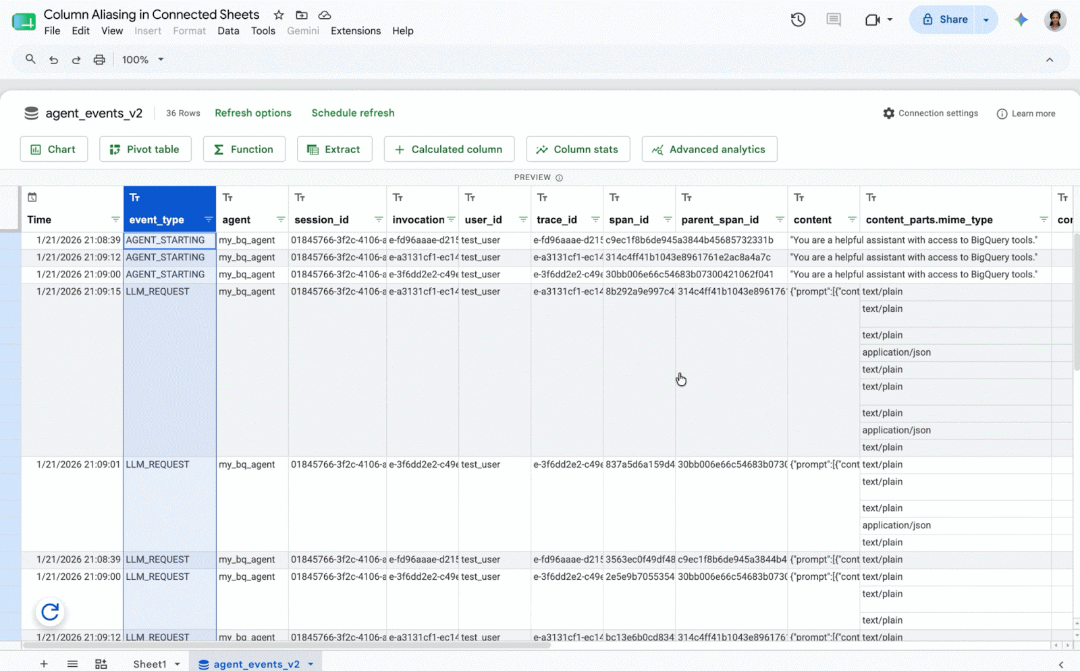
Google has officially announced a series of significant usability enhancements for Connected Sheets within the Google Workspace ecosystem on August 11, 2026. This update, shared through the company’s official product newsroom, aims to streamline how professionals interact with massive datasets. The announcement is particularly important because it bridges the gap between complex BigQuery data analysis and the familiar interface of spreadsheets, allowing for more intuitive data exploration across large organizations.
The update introduces two primary features designed to increase flexibility and improve data presentation for all users. The first major addition is list parameters, which allow users to reference multiple values from a specific grid range directly within their queries. Furthermore, Google has implemented column aliasing, enabling users to create presentation-ready labels for complex database columns. These changes are intended to simplify advanced filtering and make data visualization more accessible to non-technical collaborators without modifying underlying database structures.
Technologically, the implementation leverages direct integration with BigQuery, ensuring that aliases and parameters function seamlessly within existing formulas and inputs. The rollout for these features is scheduled to be available to all Google Workspace customers, including those using personal Google accounts, starting from mid-August 2026. According to official documentation, the system allows data administrators to configure input sheets that empower end-users to self-serve insights through simple drop-down menus or sheet selections, significantly reducing the technical barrier for high-level data interaction.
These enhancements are expected to have a profound impact on how businesses handle data-driven decision-making by fostering a more collaborative environment. By allowing for clearer labels and more robust querying, the industry will likely see a shift toward decentralized data analysis where insights are no longer gatekept by specialized teams. For users, this means a more efficient workflow and reduced reliance on manual query adjustments. Looking ahead, Google will likely continue to expand these integration capabilities to further unify its cloud computing and productivity suites.
Source: Google blog