
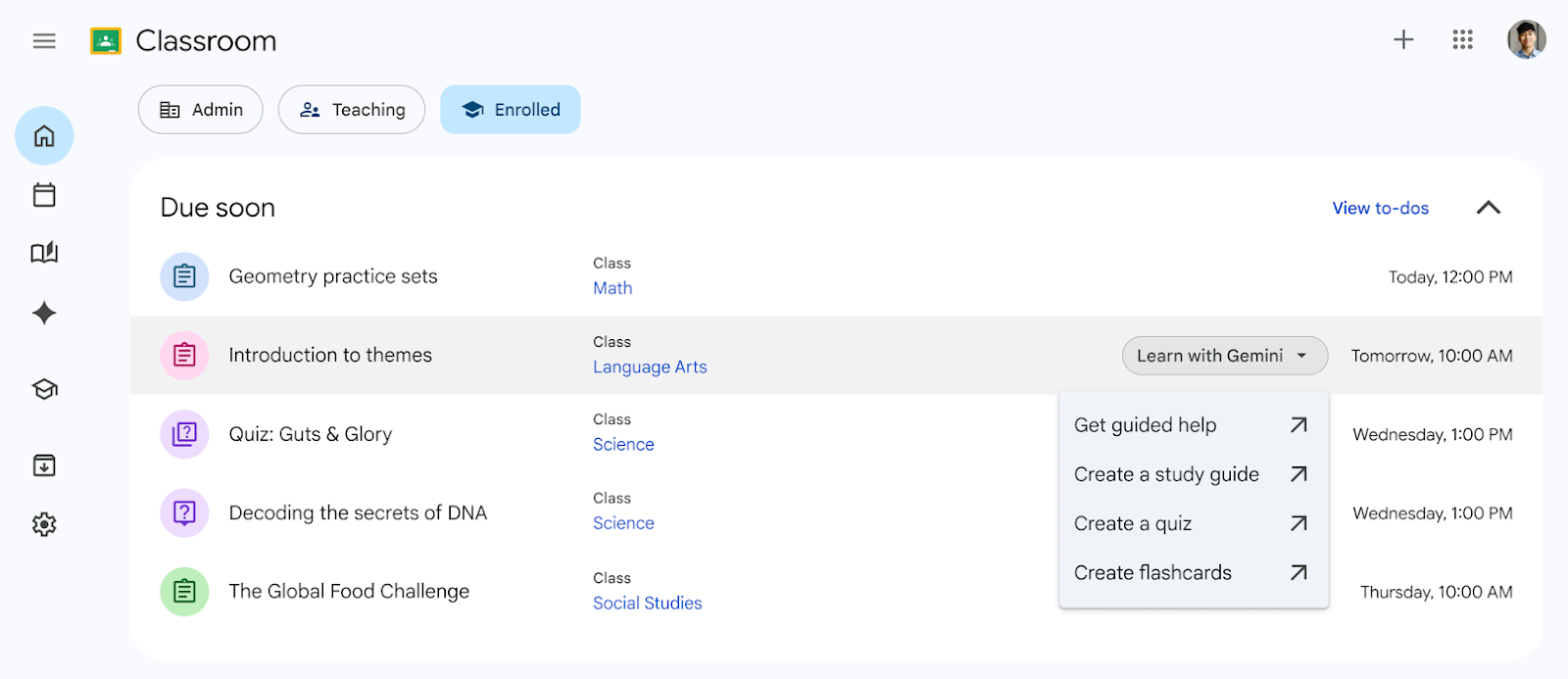
Google has officially announced a significant expansion of its Gemini artificial intelligence tools within Google Classroom. This update, unveiled on August 4, 2026, marks a pivotal shift in the company’s educational technology strategy by making advanced AI accessible to a much broader demographic of learners. The announcement is particularly important as it represents Google’s commitment to integrating generative AI directly into the primary and secondary education experience, aiming to revolutionize how students interact with digital learning environments.
The core of this update is the removal of age-based restrictions that previously limited Gemini’s use in Classroom to higher education students aged 18 and older. Along with this broader access, Google is introducing contextualized Gemini starter prompts specifically designed for younger students to guide their learning process effectively. These new features allow students to engage with AI for brainstorming, summarizing complex topics, and receiving personalized study assistance, which significantly enhances the interactive capabilities of the platform compared to its previous static iterations.
Technologically, the implementation leverages Google’s latest Gemini models, which have been refined with additional safety layers and educational guardrails to ensure appropriate content for all age groups. This rollout is scheduled to begin on August 10, 2026, and will be available to Google Workspace for Education users globally, targeting millions of students and educators. According to official statements from the company, the integration is designed to work seamlessly within existing Classroom workflows, providing a cohesive experience that prioritizes student privacy and data security.
The expansion of Gemini is expected to have a profound impact on the educational industry by setting a new standard for AI integration in K-12 schooling. For students, it provides a powerful assistant that can help bridge learning gaps and foster digital literacy from an early age, while educators benefit from a more dynamic toolset to support diverse classroom needs. Looking forward, this move likely signals a trend toward more personalized, AI-driven curricula, potentially leading to the development of even more specialized educational agents that can adapt to individual student progress in real-time.
Source: Google Blog