
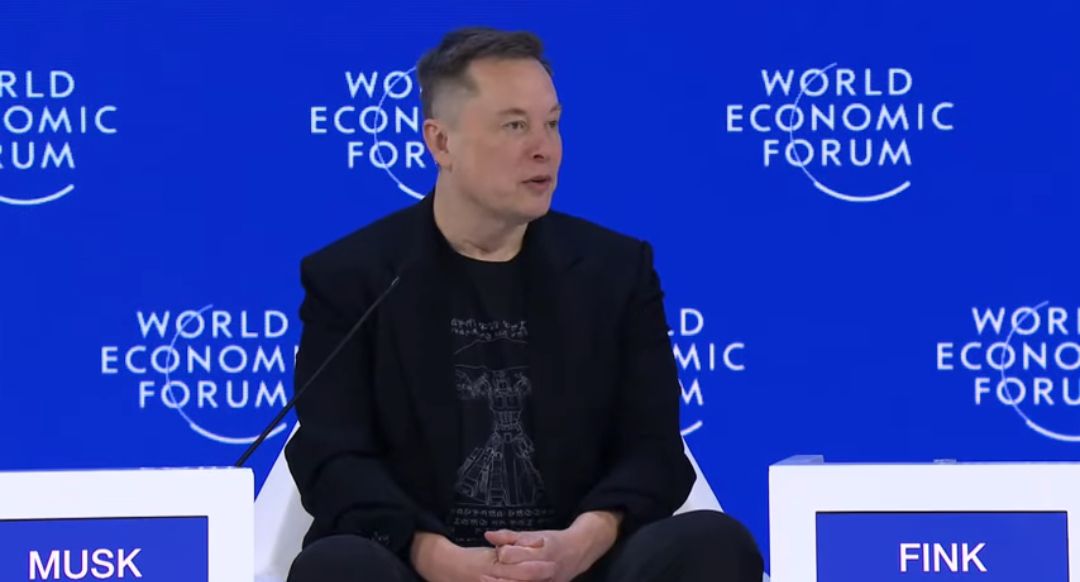
At the World Economic Forum (WEF) Davos 2026, Elon Musk once again shared his bold outlook on the future of artificial intelligence. He stated that AI is advancing far faster than most people realize and is approaching a critical point that could fundamentally reshape humanity’s role in the modern world.
Musk predicted that around the year 2030, AI could surpass human intelligence as a whole. This does not merely refer to outperforming individual humans, but exceeding the collective intelligence of humanity. According to him, rapid improvements in computing power, data availability, and learning algorithms are driving AI growth at an exponential pace rather than a gradual one.
During the discussion, Musk explained that AI systems are no longer limited to following predefined instructions. They are increasingly capable of learning autonomously, understanding context, and improving themselves over time. While this opens massive opportunities for innovation and efficiency, it also raises serious questions about the future of human roles, particularly in work, decision-making, and leadership.
Despite the alarming implications, Musk emphasized that AI does not have to become a threat. The real challenge, he argued, lies in humanity’s ability to establish proper ethical frameworks, regulations, and safeguards. He believes the decade leading up to 2030 will be decisive in determining whether AI becomes humanity’s greatest tool for progress—or a risk that is difficult to control.
Source: YouTube WEF