
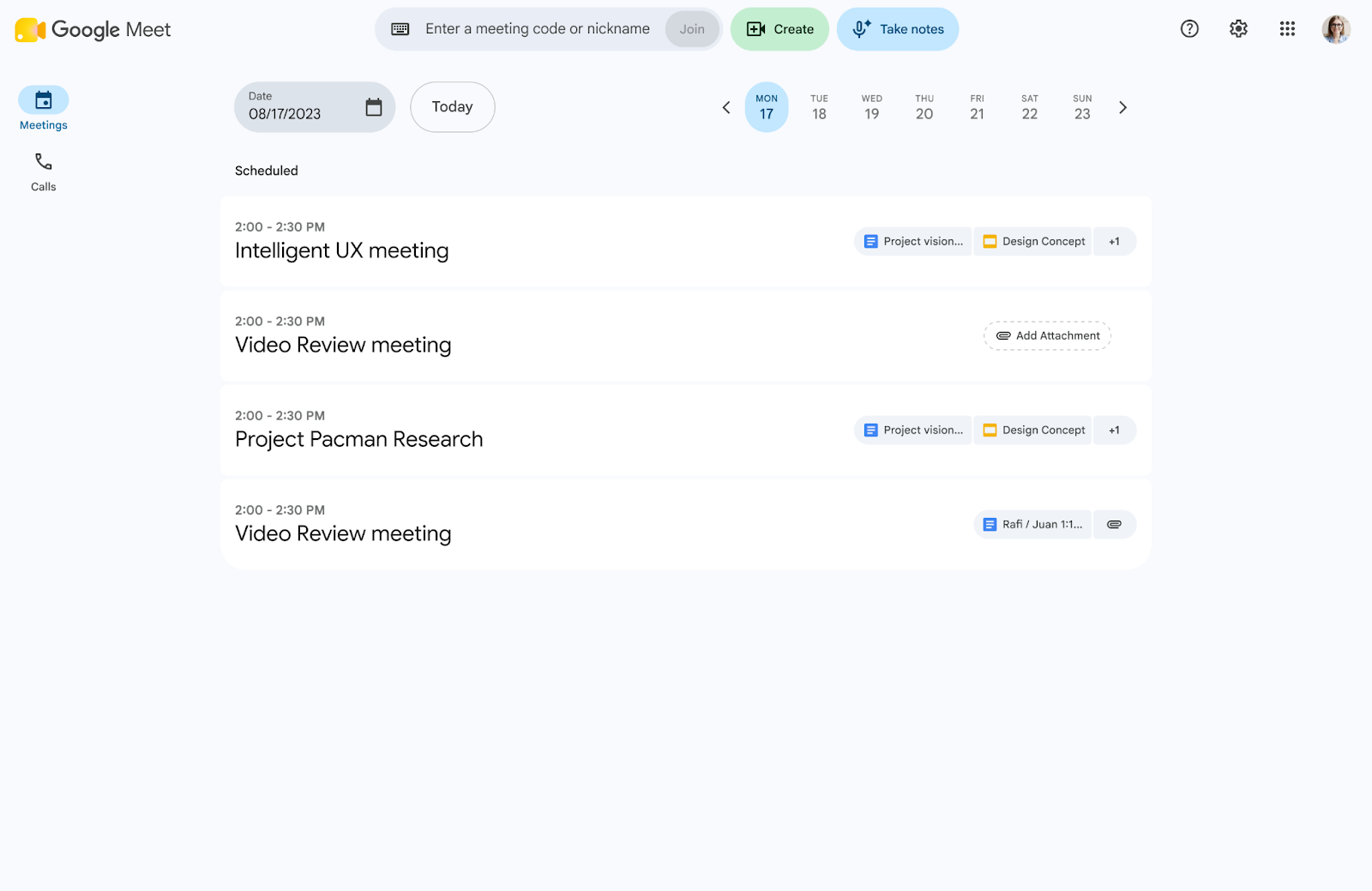
Google has officially launched a new artificial intelligence feature designed to assist users during face-to-face discussions. Announced on August 13, 2026, the “Take Notes for me” capability is now expanding its reach from virtual video calls to physical in-person meetings. This announcement is significant because it positions Google Meet as a comprehensive hub for all professional collaborations, regardless of whether they occur online or in a shared physical office space.
The primary enhancement introduces a dedicated “Take notes” button accessible directly from the Google Meet home screen on both web and mobile platforms. Unlike previous versions that were limited to digital conferencing, this update utilizes Gemini AI to actively capture and process audio from live, physical environments. The goal of this feature is to allow participants to remain fully present in the moment without the distraction of manual transcription, ensuring that critical context is never lost during spontaneous or scheduled office talks.
Technologically, the feature leverages advanced audio capture and structured summarization models within the Gemini ecosystem. Once a session concludes, the AI automatically generates a Google Doc containing a structured summary, a list of action items, and a full transcript, which is then saved to Google Drive and emailed to the user. The rollout began on August 11, 2026, for Android devices, with web and iOS support following shortly after. This tool is available to various Google Workspace tiers, including Business Standard, Enterprise Plus, and Google AI Pro subscribers.
This expansion is expected to significantly boost productivity by reducing the administrative burden of post-meeting documentation for teams worldwide. By integrating AI note-taking into the physical workspace, Google is setting a new standard for hybrid work environments and challenging traditional methods of meeting management. For the broader tech industry, this move signals a shift toward ambient AI assistants that seamlessly support users in their natural workflows. Future developments will likely focus on refining voice recognition in noisy office settings and expanding integration with other collaborative software.
Source: Google blog