
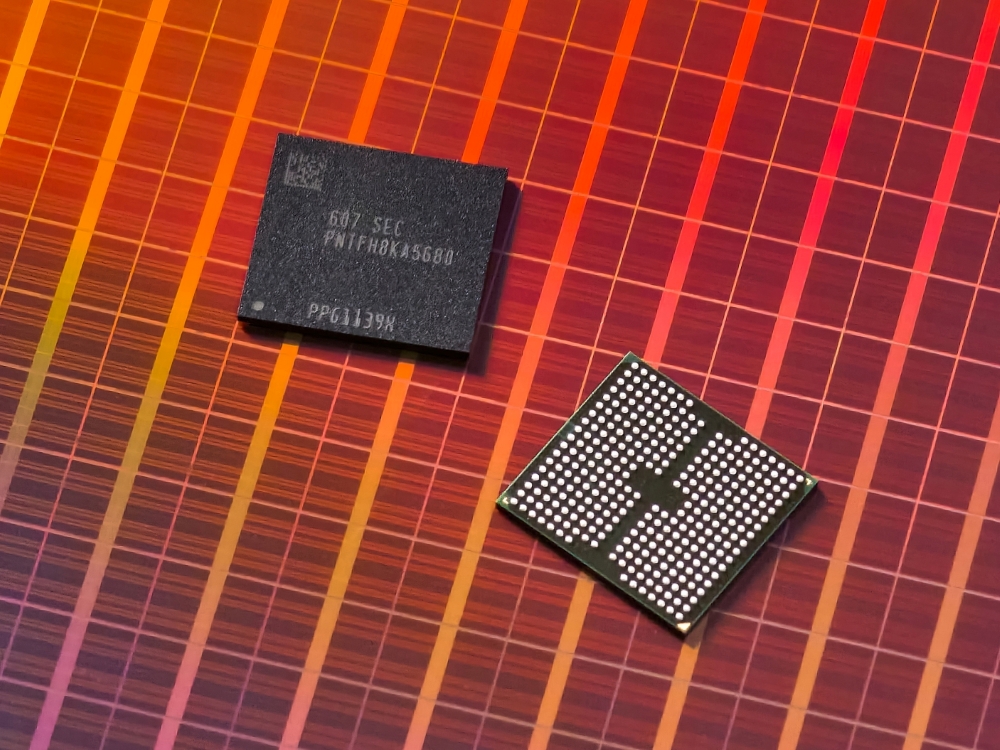
Samsung has unveiled a new vision for 3D memory technology at the Future of Memory and Storage (FMS) 2026 event in Santa Clara, California. The company showcased around 30 memory and storage technologies designed to meet the demands of next-generation AI infrastructure, including new zHBM and zNAND-O concepts as well as V10 BV-NAND with more than 400 layers.
Samsung sees these developments as increasingly important as AI systems require greater data-processing capabilities while maintaining better power efficiency.
One of the key technologies is zHBM, a memory concept that vertically places HBM directly above an AI accelerator rather than positioning it alongside the processor as in conventional designs. By shortening the distance data needs to travel between memory and the processor, Samsung aims to improve bandwidth while reducing power consumption. Samsung estimates that a next-generation interface system using zHBM could deliver around eight times the performance of HBM5, with more than 10 times the memory density and up to three times better energy efficiency.
Samsung also introduced zNAND-O, a high-performance NAND solution being developed in four- and eight-layer configurations. The technology combines space efficiency, improved I/O performance, and low latency for edge AI applications that require fast data processing. In addition, Samsung unveiled V10 BV-NAND, a new architecture that uses wafer bonding technology to stack memory cells. With more than 400 layers, V10 BV-NAND is designed to increase memory density by around 58 percent compared with the previous V9 generation while also improving read, write, and I/O performance.
Beyond these technologies, Samsung showcased a broader portfolio of AI-focused memory and storage solutions, including HBM4E, HBM5, LPDDR5X-PIM, PM1763, and BM1773. LPDDR5X-PIM can process data directly within memory, reducing data movement and improving power efficiency. Samsung is also pursuing an integrated strategy that combines memory, foundry, and advanced packaging capabilities, allowing the company to support customers from design through mass production. These developments highlight how memory innovation is becoming increasingly important to building high-performance and energy-efficient AI infrastructure.
Source: Samsung Newsroom