
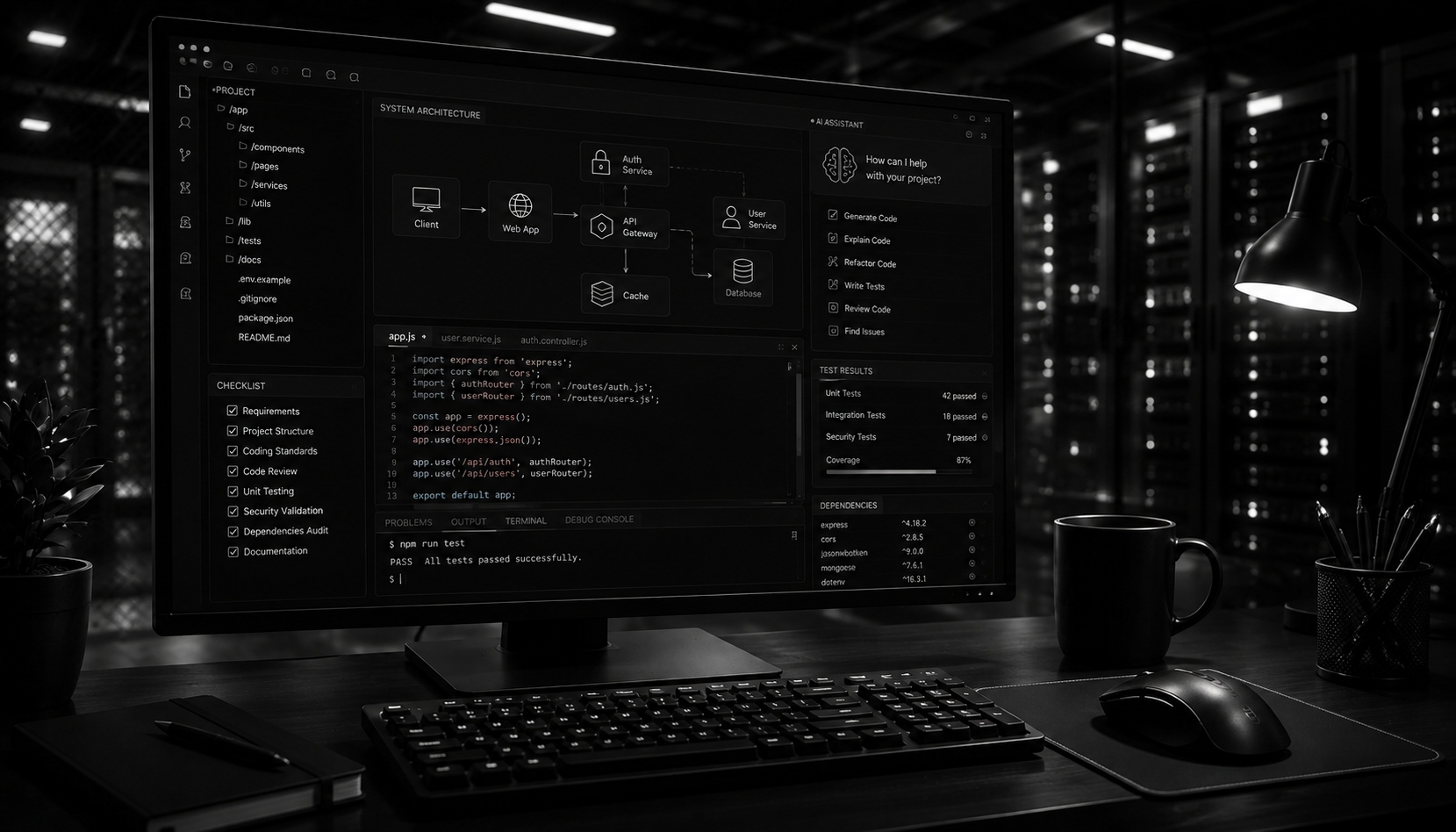
Vibe coding can significantly speed up application development with the help of AI, but it still requires careful planning to avoid problems later. Before getting started, make sure you clearly understand your project’s goals, the core features you want to build, and the technologies you plan to use. With a clear direction, AI is more likely to generate relevant and consistent code.
Choose an AI model that fits your needs, then prepare your documentation, project structure, and development guidelines from the beginning. Use clear and specific prompts, explain the application’s architecture, coding standards, and any constraints the AI should follow. The more context you provide, the lower the chance of receiving code that doesn’t meet your expectations.
Although AI can generate code quickly, every output should still be reviewed and tested. Perform code reviews, run unit tests, validate security, and ensure that all dependencies come from trusted sources. Avoid deploying AI-generated code directly to a production environment without proper verification.
Finally, think of AI as an assistant rather than a replacement for developers. Decisions involving architecture, security, performance, and user experience should always remain in human hands. Combining AI’s capabilities with strong technical knowledge will lead to a faster, safer, and higher-quality vibe coding workflow.