
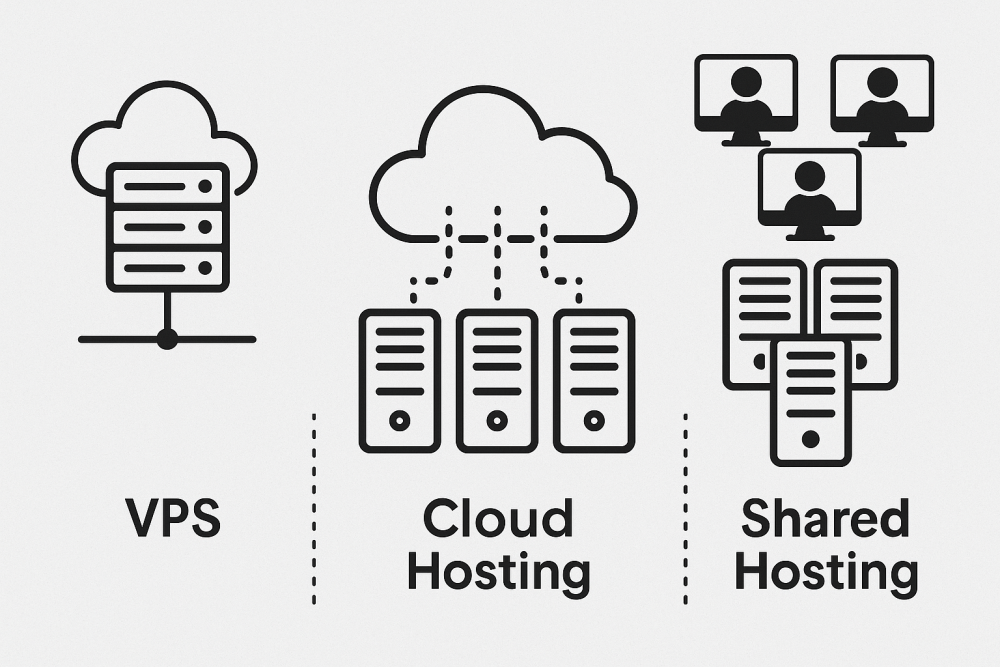
Choosing the right hosting type is an important step to ensure your website stays fast, secure, and stable. Many website owners often get confused when comparing shared hosting, VPS, and cloud hosting because they seem similar at first glance, even though each option serves different needs and performance levels. By understanding these key differences, you can determine which service best fits your business or project.
Shared hosting is the most affordable option because one server is used together with many other users. However, the main drawback is that performance and speed can drop if another website on the same server consumes too many resources. On the other hand, a VPS (Virtual Private Server) gives you an isolated portion of the server, providing more stable performance, flexibility, and security—making it suitable for medium-scale websites that need greater control.
Cloud hosting offers even higher flexibility and stability because your website runs on multiple servers at once. If one server experiences issues, another automatically takes over, minimizing the risk of downtime. This type of hosting is ideal for businesses that require scalability, handle fluctuating traffic, or prioritize performance without being limited by physical hardware resources.